Frideo. This weeks installment is a music video, a cover of Roger Miller's "King of the Road" by The Proclaimers. Who are The Proclaimers, you ask? Well, they are the Scottish one-hit wonder that blessed the world with the single "I'm Gonna Be (500 Miles)". You know, "... I would walk 500 miles and I would walk 500 more..."
Anyways, I'm not entirely sure why I like this video so much. Part of it is the accent, I think. It is also an interesting combination of cool and nerd: I love the way the two pull off wearing the tuxes and the bling and those giant glasses. The song itself is incredibly catchy, and this laid-back rendition is excellent. Check it out:
Friday, February 23, 2007


Tuesday, February 20, 2007
I was browsing the BBC World Service and came across this story concerning an ultimatum issued by the Anglican church to the Episcopal church in the States "demanding an end to the appointment of gay clergy and the blessing of same-sex couples." The article itself is not my focus here, but rather it's discussion in the BBC's "Have Your Say" feature, including this gem:
The entire discussion is a fairly horrendous mix of the "expert" opinions of people who have no clue about what Christianity really is, but Rev. Casey's submission stood out. How can someone who has studied God's Word say something like "the Bible is not about sex," as if one's private life is irrelevant or somehow outside the scope of God's purview? Against the "Rev'd Casey", Abraham Kuyper proclaims:
I am an Englishman,formerly a member of the CofE and now an Episcopal Priest in the Diocese of Central PA;also a member of the Human Sexuality Commission in the diocese.I appreciate the struggle the Anglican Communion is experiencing but I do not believe an ultimatum to the house of Bishops in US will help matters. the Bible is not about sex but peace & justice and equal access to God regardless of race, gender, or sexual inclination.
The Rev'd Stephen C. Casey, Lancaster, Pennsylvania, USA
The entire discussion is a fairly horrendous mix of the "expert" opinions of people who have no clue about what Christianity really is, but Rev. Casey's submission stood out. How can someone who has studied God's Word say something like "the Bible is not about sex," as if one's private life is irrelevant or somehow outside the scope of
 God's purview? Against the "Rev'd Casey", Abraham Kuyper proclaims:
"There is not a square inch in the whole domain of our human existence over which Christ, who is Sovereign over all, does not cry: 'Mine!'"
Friday, February 16, 2007
Frideo. This is the first installment of what I hope will be a weekly feature of this blog. I spend a good bit of time each week browsing YouTube, Google Video, and other such sites (it's a great way to procrastinate), and now you can share in the wealth I've uncovered. I may post music videos, like "Song of the Week" over at Boerishbwoy, or just something I thought was funny, or perhaps something from the world of cinema, classic scenes or trailers for movies I'd recommend. Basically whatever strikes my fancy is fair game.
Because this is the first installment of Frideo, I've decided to go for a double feature. The following two videos are, I think, quite clever. They are impromptu musicals arranged by Prangstrüp, the first in a university library and the second in a lecture. Enjoy!
Because this is the first installment of Frideo, I've decided to go for a double feature. The following two videos are, I think, quite clever. They are impromptu musicals arranged by Prangstrüp, the first in a university library and the second in a lecture. Enjoy!
Wednesday, February 14, 2007
So, I decided to spring-clean my blog since I had a snow day today. (Interestingly enough, I believe this is the first time I was ever disappointed to have an unexpected day off from class. We were set to discuss selections from Kierkegaard concerning how to read the Bible, and I found his thoughts incredibly stimulating. I was really looking forward to the discussion. Maybe I'll post on it later. Anyways...) I know it isn't spring yet, but as Michael Scott once said, “If you do your spring cleaning in January guess what you don't have to do in the Spring... anything.” As you probably have noticed I've got the new template, entirely because I thought the old one was really ugly. The sole downside is that all my comments have been erased, mais c'est la vie. I've also removed the dead links from the list of blogs on the sidebar, and added a few new ones.
The redesign of the aesthetics comes along with a re-thinking of the purpose of this blog in general. The truth of the matter is, I'm not sure exactly in which direction to take it. My uncle John Harsevoort, a man whom I respect a great deal, has encouraged me to make this space a bit more personal, to share whatever wisdom God has blessed me with. I'm actually quite uncomfortable with the thought of taking up this challenge. To put it bluntly, I really don't think of myself as having a great store of wisdom to share. At least, nothing that jumps to mind. However, this may be because I am not the most reflective person out there. I do think that God has granted me special gifts to help me face the special physical struggles that come with spinal muscular atrophy. And I am convinced that I have this disease with a purpose, part of which is to show an example of the joy and contentment with which God blesses his children even in difficult circumstances.
Now, people seem to assume that my physical struggles bring with them emotional struggles, self-pity and frustration, and spiritual struggles, anger at God for giving me a broken body. The truth of the matter is that I have never really suffered. I do not now, nor have I ever battled sorrow or depression. As for blaming God, I can honestly say that the thought has never seriously crossed my mind. I am incredibly happy with my life, even with its imperfection. This is entirely due to the fact that God has provided for my every need: a large and loving family and good friends to care for whatever physical assistance I require, lots of opportunity for mental and social stimulation, the chance to have a productive life, the list goes on and on.
This is part of the problem. People with wisdom to share are, I think, those who have experienced overcoming a trial or a test of some sort; the greater the trial, the greater the achievement of overcoming, the more their lives have to offer. For me, my physical suffering has been easy to bear because I have been richly blessed with joy and peace from a young age. I have never had to climb
Monday, December 25, 2006
“And the Word was made Flesh,” he saith, “and dwelt among us.”
Having declared that they who received Him were “born of God,” and had become “sons of God,” he adds the cause and reason of this unspeakable honor. It is that “the Word became Flesh,” that the Master took on Him the form of a servant. For He became Son of man, who was God’s own Son, in order that He might make the sons of men to be children of God. For the high when it associates with the low touches not at all its own honor, while it raises up the other from its excessive lowness; and even thus it was with the Lord. He in nothing diminished His own Nature by this condescension, but raised us, who had always sat in disgrace and darkness, to glory unspeakable.
- From John Chrysostom's "Homilies on the Gospel of
Wednesday, December 06, 2006
It's the Most Wonderful Time of the Year...
I haven't been paying a great deal of attention to this blog recently, mainly because paper season has returned. I am presently working on a comparison of René Girard's systematic approach to the study of religion with that of the ever beloved Danish Saint. Next up is a treatment of faith as it functions in Augustine's De Trinitate. Thirdly and finally I hope to explore the Apostle Paul's usage of "ο κοσμος" with an eye to the relationship of nature and grace.
At least I don't have any exams.
Saturday, November 25, 2006
Music Challenge (via Jake)
1. Put your music player on shuffle.
2. Press forward for each question.
3. Use the song title as the answer to the question even if it doesn't make sense.
NO CHEATING!
How are you feeling today?
Heart of Gold
How do your friends see you?
Whiskey & Gin
Will you get married?
Pretty Maids All In A Row
What is your best friend's theme song?
If Love Is a Red Dress (Hang Me in Rags)
What is the story of your life?
It's All over Now, Baby Blue
What was high school like?
Ammunition
How can you get ahead in life?
Imaginary Love
What is the best thing about your friends?
Yahweh
What is tonight going to be like?
Maybe
What is in store for the remainder of this weekend?
Down by the Sea
Friday, October 20, 2006
I've Been Tagged
My thoughts on the following words? Let me see...
Subliminal: A characteristic of messages directed at the subconscious mind. If there were greater communication between the subconscious and the conscious, we'd be seeing messages everywhere!
Abomination: Idolatry, incest, child sacrifice, unjust weights and measures, adultery, homosexuality, etc. These are some of the abominations described in Leviticus and Deuteronomy; actions that, with utter rebelliousness at heart, fly in the face of God's loving design for his creation.
Tirade: A lengthy angry rant, as perfected by one of my favourite actors, Klaus Kinski.
Pretension: What someone is accused of when they say that one of their favourite actors is Klaus Kinski.
Thursday, October 05, 2006
 Get Well Mr. Ebert
As you might be aware, Roger Ebert is under the weather. He has been convalescing after surgery for some weeks now, which means I've been without his helpful input into the world of cinema. Say what you will about the usefulness of critics and reviews, about forming your own opinion rather than listening to the so-called "experts", but I don't mind learning from the master. Besides which, his writing style is great and his reviews always make for entertaining reading. So: Get well soon Mr. Ebert. I look forward to your next review.
In case you are eagerly awaiting the return of Ebert, you can tide yourself over by reading the following essay he wrote after writing his 100th "Great Movies" review (also available from his official web site). It is a wonderful bit of writing, and shows the passion for cinema which makes Ebert a joy to read.
Every other week I visit a film classic from the past and write about it. My "Great Movies" series began in the autumn of 1996 and now reaches a landmark of 100 titles with today's review of Federico Fellini's "8 1/2," which is, appropriately, a film about a film director. I love my job, and this is the part I love the most.
We have completed the first century of film. Too many moviegoers are stuck in the present and recent past. When people tell me that "Ferris Bueller's Day Off" or "Total Recall" are their favorite films, I wonder: Have they tasted the joys of Welles, Bunuel, Ford, Murnau, Keaton, Hitchcock, Wilder or Kurosawa? If they like Ferris Bueller, what would they think of Jacques Tati's "Mr. Hulot's Holiday," also about a strange day of misadventures? If they like "Total Recall," have they seen Fritz Lang's "Metropolis," also about an artificial city ruled by fear?
I ask not because I am a film snob. I like to sit in the dark and enjoy movies. I think of old films as a resource of treasures. Movies have been made for 100 years, in color and black and white, in sound and silence, in wide-screen and the classic frame, in English and every other language. To limit yourself to popular hits and recent years is like being Ferris Bueller but staying home all day.
I believe we are born with our minds open to wonderful experiences, and only slowly learn to limit ourselves to narrow tastes. We are taught to lose our curiosity by the bludgeon-blows of mass marketing, which brainwash us to see "hits," and discourage exploration.
I know that many people dislike subtitled films, and that few people reading this article will have ever seen a film from Iran, for example. And yet a few weeks ago at my Overlooked Film Festival at the University of Illinois, the free kiddie matinee was "Children of Heaven," from Iran. It was a story about a boy who loses his sister's sneakers through no fault of his own, and is afraid to tell his parents. So he and his sister secretly share the same pair of shoes. Then he learns of a footrace where third prize is . . . a pair of sneakers."
Anyone who can read at the third-grade level can read these subtitles," I told the audience of 1,000 kids and some parents. "If you can't, it's OK for your parents or older kids to read them aloud--just not too loudly."
The lights went down and the movie began. I expected a lot of reading aloud. There was none. Not all of the kids were old enough to read, but apparently they were picking up the story just by watching and using their intelligence. The audience was spellbound. No noise, restlessness, punching, kicking, running down the aisles. Just eyes lifted up to a fascinating story. Afterward, we asked kids up on the stage to ask questions or talk about the film. What they said indicated how involved they had become.
Kids. And yet most adults will not go to a movie from Iran, Japan, France or Brazil. They will, however, go to any movie that has been plugged with a $30 million ad campaign and sanctified as a "box-office winner." Yes, some of these big hits are good, and a few of them are great. But what happens between the time we are 8 and the time we are 20 that robs us of our curiosity? What turns movie lovers into consumers? What does it say about you if you only want to see what everybody else is seeing?
I don't know. What I do know is that if you love horror movies, your life as a filmgoer is not complete until you see "Nosferatu." I know that once you see Orson Welles appear in the doorway in "The Third Man," you will never forget his curious little smile. And that the life and death of the old man in "Ikiru" will be an inspiration every time you remember it.
I have not written any of the 100 Great Movies reviews from memory. Every film has been seen fresh, right before writing. When I'm at home, I often watch them on Sunday mornings. It's a form of prayer: The greatest films are meditations on why we are here. When I'm on the road, there's no telling where I'll see them. I saw "Written on the Wind" on a cold January night at the Everyman Cinema in Hampstead, north of London. I saw "Last Year at Marienbad" on a DVD on my PowerBook while at the Cannes Film Festival. I saw "2001: A Space Odyssey" in 70mm at Cyberfest, the celebration of HAL 9000's birthday, at the University of Illinois. I saw "Battleship Potemkin" projected on a sheet on the outside wall of the Vickers Theater in Three Oaks, Mich., while three young musicians played the score they had written for it. And Ozu's "Floating Weeds" at the Hawaii Film Festival, as part of a shot-by-shot seminar that took four days.
When people asked me where they should begin in looking at classic films, I never knew what to say. Now I can say, "Plunge into these Great Movies, and go where they lead you."There's a next step. If you're really serious about the movies, get together with two or three friends who care as much as you do. Watch the film all the way through on video. Then start again at the top. Whenever anyone sees anything they want to comment on, freeze the frame. Talk about what you're looking at. The story, the performances, the sets, the locations. The camera movement, the lighting, the composition, the special effects. The color, the shadows, the sound, the music. The themes, the tone, the mood, the style.
There are no right answers. The questions are the point. They make you an active movie watcher, not a passive one. You should not be a witness at a movie, but a collaborator. Directors cannot make the film without you. Together, you can accomplish amazing things. The more you learn, the quicker you'll know when the director is not doing his share of the job. That's the whole key to being a great moviegoer. There's nothing else to it.
Monday, September 18, 2006
A New Beginning
After four exceedingly enjoyable and enlightening years pursuing my bachelors degree at Redeemer, I am now setting out into new territory again. I have recently begun what should be a two-year stint in the Religious Studies Department at McMaster University, after which I will hopefully have my Masters degree. My major is early Christianity, and I will be focusing on patristics with Dr. Peter Widdicombe as my advisor. This will certainly be a challenging two years, both intellectually and spiritually (and physically, actually: McMaster is not the easiest place to get around in a wheelchair), but one can only grow if one is challenged. So, good times ahead...
One of my first assigned readings, an article on the scholarly debate concerning the connection between religion and violence, raised an interesting foundational question for me as I begin my time as a student of religious studies. What, exactly, is a religion? Not an easy problem to solve. If religion is defined in terms of theism, worship of some sort of deity, what about atheistic forms of Buddhism and Hindu? If religion is defined in terms of that which gives meaning to life and history, in terms of a commitment to something greater than oneself, then do Nazism, Marxism and sports fanaticism qualify as religions? Beats me.
After four exceedingly enjoyable and enlightening years pursuing my bachelors degree at
 Redeemer, I am now setting out into new territory again. I have recently begun what should be a two-year stint in the Religious Studies Department at McMaster University, after which I will hopefully have my Masters degree. My major is early Christianity, and I will be focusing on patristics with Dr. Peter Widdicombe as my advisor. This will certainly be a challenging two years, both intellectually and spiritually (and physically, actually: McMaster is not the easiest place to get around in a wheelchair), but one can only grow if one is challenged. So, good times ahead...
One of my first assigned readings, an article on the scholarly debate concerning the connection between religion and violence, raised an interesting foundational question for me as I begin my time as a student of religious studies. What, exactly, is a religion? Not an easy problem to solve. If religion is defined in terms of theism, worship of some sort of deity, what about atheistic forms of Buddhism and Hindu? If religion is defined in terms of that which gives meaning to life and history, in terms of a commitment to something greater than oneself, then do Nazism, Marxism and sports fanaticism qualify as religions? Beats me.
Monday, August 28, 2006
Campfire! Reflections 2006
Last week I spent another week at Campfire! (The more I use it, the more that exclamation mark in the name annoys me.) This was, I believe, my eighth year of service at this camp, and my 10th week. Apart from one week serving as chaplain I have always been a counselor, looking after and mentoring a group of 5-6 boys along with a co-counselor. I started off doing Discovery Weeks for 8-12-year-olds, but now stick to Teen Weeks for those between the ages of 13 and 16. This past week was one of the easiest I've ever had.
Hobbe Smit and I, known for the week as Hobiwan and R2-D2 respectively, were responsible for the oldest group of guys, four 16 year olds and one 15 year old. The guys were really mature, making our job easy. The best part was seeing them grow spiritually, in terms of their relationships with God and with each other.
Beyond the basic facts, it is difficult to communicate about one's time at Camp. It is a unique place with a unique atmosphere. What I will say is this: At Camp, more than any other place, I am able to focus myself on coming to know God more. At Camp we are free from the regular, worldly distractions of everyday life: bad language, suggestive advertising, etc. This is a good thing, but it is not unique. Any wilderness getaway boasts the same advantage. What I noticed at Camp, especially this year, was a freedom from internal distraction. Gone were the stupid, wasteful daydreams and often improper fantasy life that usually takes up a lot of my mental energy. Instead, I was able to focus my entire mind and will on growing in knowledge of God and on serving him and those around me.
Words of wisdom from Werner Herzog, one of my favorite directors:
"Centuries from now our great-great-great-grandchildren will look back at us with amazement at how we could allow such a precious achievement of human culture as the telling of a story to be shattered into smithereens by commercials, the same amazement we feel today when we look at our ancestors for whom slavery, capital punishment, burning of witches, and the inquisition were acceptable everyday events."
(This blog entry comes to you from Google's new online word processor, Writely . What will they think of next?)
Saturday, August 19, 2006
Well, I'm Off...
I'm heading off, a little early, to Campfire to spend another week as a counselor. The time I spend at Camp is really a highlight of the summer. But before I go, I've been tagged:
I'm heading off, a little early, to Campfire to spend another week as a counselor. The time I spend at Camp is really a highlight of the summer. But before I go, I've been tagged:
1. One book that changed your life: Al Wolters' Creation Regained
2. One book that you’ve read more than once: The Chronicles of Narnia by CS Lewis
3. One book you’d want on a desert island: Augustine's Confessions
4. One book that made you laugh: I find tiresome most books that are meant to be funny, but The Hitchhiker's Guide to the Galaxy by Douglas Adams cracked me up.
5. One book that made you cry: Where the Red Fern Grows, by Wilson Rawls. At least twice.
6. One book that you wish had been written: The definitive work on the relationship between theology and philosophy/faith and reason. Or, The Great Canadian Novel by Pieter A. Harsevoort.
7. One book that you wish hadn’t been written: Mein Kampf, Adolf Hitler.
8. One book that you’re currently reading: A Treasury of Jewish Folklore, edited by Nathan Ausubel.
9. One book that you’ve been meaning to read: The Enneads by Plotinus
10. Now tag five people. Nah.
Wednesday, August 16, 2006
Tsotsi (Gavin Hood, 2005)
I have returned from a delightful vacation up north, and a package from Amazon was waiting for me when I got back. It contained one copy of Beowulf, one copy of the African Bible Commentary (which I hope will give me a fresh perspective on familiar texts), and one copy of Tsotsi, the 2005 Oscar winner for best foreign-language film.
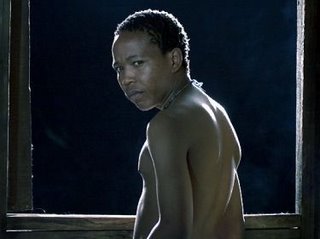 Tsotsi, a South African film, tells a stirring story of redemption. The title character, whose nickname simply means "thug", begins the film by masterminding and participating in a robbery-turned-murder on a crowded subway, viciously beating one of his cronies for getting on his nerves and stealing a car after shooting its owner. He is vicious, seemingly capable of any kind of cruelty. Presley Chweneyagae, the 22 year old Soweto native, is incredible as Tsotsi, infusing his character with an air of constant menace.
Tsotsi's life begins to change when he realizes that there is a baby in the backseat of the car he has stolen. He takes the child to his shack, perhaps unwilling to let it suffer the same abandonment we learn he faced as a child. Gradually, and believably, Tsotsi's cold violence is softened as he begins to care for the child. He is not turned into the perfect father, or a choirboy, but rather into more of a human being capable of kindness, of love and of being loved and one willing to face the consequences of his actions.
 The ending of the film is perfect. It does not give Tsotsi an unfair easy escape from his past, and yet it shows real hope for his future. The final image is of the young man with his arms raised above his head. It is a pose of surrender, yet it struck me more as a posture of prayer, of reaching heavenwards to God, the sort of thing one often sees at worship during an especially powerful song.
Presley Chweneyagae, as mentioned, gives a great performance which makes the transformation of his character into reality. It is not an easy role, growing from psychopath to sympathetic, and he pulls it off spectacularly. Equally strong is Terry Pheto as Miriam, a young widowed mother whom Tsotsi coerces, at gunpoint, into breast-feeding the baby. She brings a real wisdom and strength to the role.
Zola also deserves mention. He plays a minor role in the film, but also provides most of the soundtrack. His music, South African hip-hop in style, is energetic, loud and angry. It gives the audience a small taste of African slum life.
A lot of gangster films of the last number of years have been exercises in style. Thanks to the work of Tarantino (Pulp Fiction), Guy Ritchie (Snatch), and Fernando Meirelles (City of God), among others, the genre has been given a certain, hyper edited look: lots of camera effects and movement, quick cuts, striking angles, etc. Tsotsi, if anything, is oppositely underdirected. The camera does not add flair, it is simply the observer.
 I am a big fan of stylish films. Yet, I think Tsotsi's simplicity is more appropriate to the subject matter than the flashy work of Meirelles. City of God makes being a criminal look good. The audience is horrified by the violence, but can't help thinking that being a gangster must be exciting. It romanticizes a despicable lifestyle. As Walter Chaw writes in his review, "...City of God makes a mistake in making human misery exhilarating--an invitation to rubberneck un-tempered by social responsibility."
In Tsotsi, the desperation, the fear and the misery of the criminal life is not hidden by fancy camera work. It means a more relevant film, and adds meaning and weight to the eventual redemption.
I have returned from a delightful vacation up north, and a package from Amazon was waiting for me when I got back. It contained one copy of Beowulf, one copy of the African Bible Commentary (which I hope will give me a fresh perspective on familiar texts), and one copy of Tsotsi, the 2005 Oscar winner for best foreign-language film.
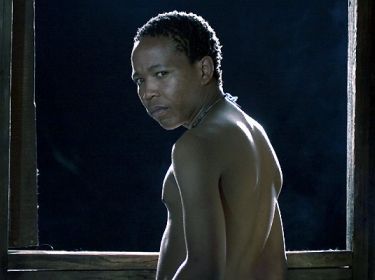 Tsotsi, a South African film, tells a stirring story of redemption. The title character, whose nickname simply means "thug", begins the film by masterminding and participating in a robbery-turned-murder on a crowded subway, viciously beating one of his cronies for getting on his nerves and stealing a car after shooting its owner. He is vicious, seemingly capable of any kind of cruelty. Presley Chweneyagae, the 22 year old Soweto native, is incredible as Tsotsi, infusing his character with an air of constant menace.
Tsotsi's life begins to change when he realizes that there is a baby in the backseat of the car he has stolen. He takes the child to his shack, perhaps unwilling to let it suffer the same abandonment we learn he faced as a child. Gradually, and believably, Tsotsi's cold violence is softened as he begins to care for the child. He is not turned into the perfect father, or a choirboy, but rather into more of a human being capable of kindness, of love and of being loved and one willing to face the consequences of his actions.
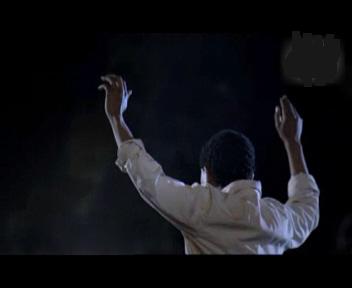 The ending of the film is perfect. It does not give Tsotsi an unfair easy escape from his past, and yet it shows real hope for his future. The final image is of the young man with his arms raised above his head. It is a pose of surrender, yet it struck me more as a posture of prayer, of reaching heavenwards to God, the sort of thing one often sees at worship during an especially powerful song.
Presley Chweneyagae, as mentioned, gives a great performance which makes the transformation of his character into reality. It is not an easy role, growing from psychopath to sympathetic, and he pulls it off spectacularly. Equally strong is Terry Pheto as Miriam, a young widowed mother whom Tsotsi coerces, at gunpoint, into breast-feeding the baby. She brings a real wisdom and strength to the role.
Zola also deserves mention. He plays a minor role in the film, but also provides most of the soundtrack. His music, South African hip-hop in style, is energetic, loud and angry. It gives the audience a small taste of African slum life.
A lot of gangster films of the last number of years have been exercises in style. Thanks to the work of Tarantino (Pulp Fiction), Guy Ritchie (Snatch), and Fernando Meirelles (City of God), among others, the genre has been given a certain, hyper edited look: lots of camera effects and movement, quick cuts, striking angles, etc. Tsotsi, if anything, is oppositely underdirected. The camera does not add flair, it is simply the observer.
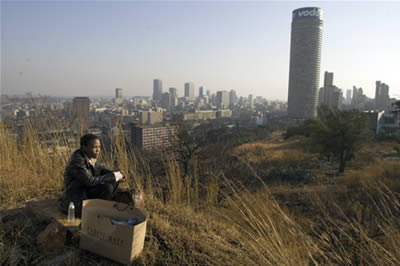 I am a big fan of stylish films. Yet, I think Tsotsi's simplicity is more appropriate to the subject matter than the flashy work of Meirelles. City of God makes being a criminal look good. The audience is horrified by the violence, but can't help thinking that being a gangster must be exciting. It romanticizes a despicable lifestyle. As Walter Chaw writes in his review, "...City of God makes a mistake in making human misery exhilarating--an invitation to rubberneck un-tempered by social responsibility."
In Tsotsi, the desperation, the fear and the misery of the criminal life is not hidden by fancy camera work. It means a more relevant film, and adds meaning and weight to the eventual redemption.
Thursday, July 27, 2006
Friday, July 14, 2006
The Beauty of Sports
Over the last number of months I've watched a great deal of sports. First it was Canada's disappointing performance in Olympic hockey, then the dazzling Stanley Cup playoffs followed immediately by the World Cup. These days, it seems that almost the only thing I find enjoyable on TV is sports. I've heard some comments lately about the ridiculousness of soccer ("Grown men spending an hour and a half kicking a ball back and forth..."), and of course such criticism can be applied to any sport. So, here is my defense of watching sports.
 I think there are two major reasons why sports are compelling entertainment. In the first place, a game of soccer or hockey or a tennis match, etc., often exceeds regular TV programming in terms of drama, suspense and intensity.
Let's face it, most TV shows are poorly written and extremely predictable. But who could have predicted Liverpool's three-goal comeback and eventual victory in shootouts against favourites AC Milan in last year's champions League final? Or Zidane's now (in)famous head-butt in the last game of the World Cup? In every game of any sport there is the potential for classic drama: the clash of personalities under pressure, underdog victories, and so on.
Because of this unpredictability, this atmosphere in which anything can happen, a good sporting event can produce a level of suspense to rival the best of Hitchcock (Alfred, not Ken). There is perhaps nothing as intense, as filled with anticipation and apprehension, as watching a breakaway in the dying seconds of a tied game, or a penalty shootout where everything is on the line. This atmosphere of suspense increases the more one follows and identifies with any given team. The team's victories come to be yours, as do its defeats.
 Beyond the drama and suspense, there is another simple reason why I enjoy watching sports. It has to do with aesthetics. At a very basic level, there is something inherently pleasing about watching somebody do something they are exceedingly good at. Professional athletes dedicate themselves completely to mastering a certain set of skills, and it is a simple pleasure to witness them demonstrate their art. I love watching the crafty footwork of Ronaldinho, or the way that Alexander Ovechkin's stick becomes an extension of his body, or Cristiano Ronaldo's graceful diving technique.
This extends beyond sports, of course. Similarly, I really enjoying watching Jesse Cook's hands as he plays guitar, or an Iron Chef at work in Kitchen Stadium. But athletics is one area in which there are artists at work. Because of its aesthetic appeal, and its inherent drama and suspense, I will certainly continue to watch sports no matter how ridiculous it may seem to some people. In fact, I think there is a game on now...
Friday, July 07, 2006
Monday, June 26, 2006
It's Over!
My European vacation is now nothing but a very pleasant memory. I met some great people, saw some amazing sights, and had some once-in-a-lifetime experiences. All in all a smashing success, one that I hope to repeat sooner or later.
Now I have to adjust to a few weeks with no work, no studying (for a change), and not much else occupying my time. Thankfully, I have a giant stack of books just crying out to be read. I hope to leisurely rediscover the joy of reading for pleasure. Plus there's the World Cup to watch, as well as five or six movies on the shelf and two seasons of 24 (thanks Daryl) that I have to get through. Good times ahead.
Friday, June 16, 2006
So...
...we are nearing the end of our trip. Today we took the train to Amsterdam, tomorrow my father and I head to Cologne to see Ghana take on the Czechs, Sunday is a family day, and Monday we prepare for the return to Canada. Our plane leaves early Tuesday morning. I think I'd like to stay another month.
I won't be blogging again from NL. 'Til next time! Doe!
Tuesday, June 13, 2006
Our Round Trip in Brief
(This'll be brief on text again as I have to use the time-consuming on-screen keyboard to type.)
We made an impromptu stop at the cathedral in Cologne...

...and were well rewarded. Gorgeous!
The castle ruins in Heidelberg from the gardens:

The view from the castle:

In Paris we took a walk and saw, among other things, the Tower...

...the Hotel des Invalides...

...Notre Dame from the front...

...and from the back....

...the Louvre...

...the Bastille (on the left with des Invalides and the Eiffel Tower in background).

On the beaches of Dieppe:

The Grand Place in Brussels, a marketplace surrounded by impressive facades. There was a Turkish festival going on, with decent live music:

Back in Holland, at the Kinderdijk:

Subscribe to:
Posts (Atom)