Get Well Mr. Ebert
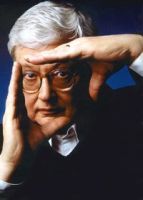
As you might be aware, Roger Ebert is under the weather. He has been convalescing after surgery for some weeks now, which means I've been without his helpful input into the world of cinema. Say what you will about the usefulness of critics and reviews, about forming your own opinion rather than listening to the so-called "experts", but I don't mind learning from the master. Besides which, his writing style is great and his reviews always make for entertaining reading. So: Get well soon Mr. Ebert. I look forward to your next review.
In case you are eagerly awaiting the return of Ebert, you can tide yourself over by reading the following essay he wrote after writing his 100th "Great Movies" review (also available from his official web site). It is a wonderful bit of writing, and shows the passion for cinema which makes Ebert a joy to read.
Every other week I visit a film classic from the past and write about it. My "Great Movies" series began in the autumn of 1996 and now reaches a landmark of 100 titles with today's review of Federico Fellini's "8 1/2," which is, appropriately, a film about a film director. I love my job, and this is the part I love the most.
We have completed the first century of film. Too many moviegoers are stuck in the present and recent past. When people tell me that "Ferris Bueller's Day Off" or "Total Recall" are their favorite films, I wonder: Have they tasted the joys of Welles, Bunuel, Ford, Murnau, Keaton, Hitchcock, Wilder or Kurosawa? If they like Ferris Bueller, what would they think of Jacques Tati's "Mr. Hulot's Holiday," also about a strange day of misadventures? If they like "Total Recall," have they seen Fritz Lang's "Metropolis," also about an artificial city ruled by fear?
I ask not because I am a film snob. I like to sit in the dark and enjoy movies. I think of old films as a resource of treasures. Movies have been made for 100 years, in color and black and white, in sound and silence, in wide-screen and the classic frame, in English and every other language. To limit yourself to popular hits and recent years is like being Ferris Bueller but staying home all day.
I believe we are born with our minds open to wonderful experiences, and only slowly learn to limit ourselves to narrow tastes. We are taught to lose our curiosity by the bludgeon-blows of mass marketing, which brainwash us to see "hits," and discourage exploration.
I know that many people dislike subtitled films, and that few people reading this article will have ever seen a film from Iran, for example. And yet a few weeks ago at my Overlooked Film Festival at the University of Illinois, the free kiddie matinee was "Children of Heaven," from Iran. It was a story about a boy who loses his sister's sneakers through no fault of his own, and is afraid to tell his parents. So he and his sister secretly share the same pair of shoes. Then he learns of a footrace where third prize is . . . a pair of sneakers."
Anyone who can read at the third-grade level can read these subtitles," I told the audience of 1,000 kids and some parents. "If you can't, it's OK for your parents or older kids to read them aloud--just not too loudly."
The lights went down and the movie began. I expected a lot of reading aloud. There was none. Not all of the kids were old enough to read, but apparently they were picking up the story just by watching and using their intelligence. The audience was spellbound. No noise, restlessness, punching, kicking, running down the aisles. Just eyes lifted up to a fascinating story. Afterward, we asked kids up on the stage to ask questions or talk about the film. What they said indicated how involved they had become.
Kids. And yet most adults will not go to a movie from Iran, Japan, France or Brazil. They will, however, go to any movie that has been plugged with a $30 million ad campaign and sanctified as a "box-office winner." Yes, some of these big hits are good, and a few of them are great. But what happens between the time we are 8 and the time we are 20 that robs us of our curiosity? What turns movie lovers into consumers? What does it say about you if you only want to see what everybody else is seeing?
I don't know. What I do know is that if you love horror movies, your life as a filmgoer is not complete until you see "Nosferatu." I know that once you see Orson Welles appear in the doorway in "The Third Man," you will never forget his curious little smile. And that the life and death of the old man in "Ikiru" will be an inspiration every time you remember it.
I have not written any of the 100 Great Movies reviews from memory. Every film has been seen fresh, right before writing. When I'm at home, I often watch them on Sunday mornings. It's a form of prayer: The greatest films are meditations on why we are here. When I'm on the road, there's no telling where I'll see them. I saw "Written on the Wind" on a cold January night at the Everyman Cinema in Hampstead, north of London. I saw "Last Year at Marienbad" on a DVD on my PowerBook while at the Cannes Film Festival. I saw "2001: A Space Odyssey" in 70mm at Cyberfest, the celebration of HAL 9000's birthday, at the University of Illinois. I saw "Battleship Potemkin" projected on a sheet on the outside wall of the Vickers Theater in Three Oaks, Mich., while three young musicians played the score they had written for it. And Ozu's "Floating Weeds" at the Hawaii Film Festival, as part of a shot-by-shot seminar that took four days.
When people asked me where they should begin in looking at classic films, I never knew what to say. Now I can say, "Plunge into these Great Movies, and go where they lead you."There's a next step. If you're really serious about the movies, get together with two or three friends who care as much as you do. Watch the film all the way through on video. Then start again at the top. Whenever anyone sees anything they want to comment on, freeze the frame. Talk about what you're looking at. The story, the performances, the sets, the locations. The camera movement, the lighting, the composition, the special effects. The color, the shadows, the sound, the music. The themes, the tone, the mood, the style.
There are no right answers. The questions are the point. They make you an active movie watcher, not a passive one. You should not be a witness at a movie, but a collaborator. Directors cannot make the film without you. Together, you can accomplish amazing things. The more you learn, the quicker you'll know when the director is not doing his share of the job. That's the whole key to being a great moviegoer. There's nothing else to it.